Computing the IPv6 EUI-64 Interface ID from a Given MAC
Refer to the exhibit. The IPv6 address for the LAN segment on router R1 must be configured using the EUI-64 format. When configured which ipv6 address is produced by the router? - 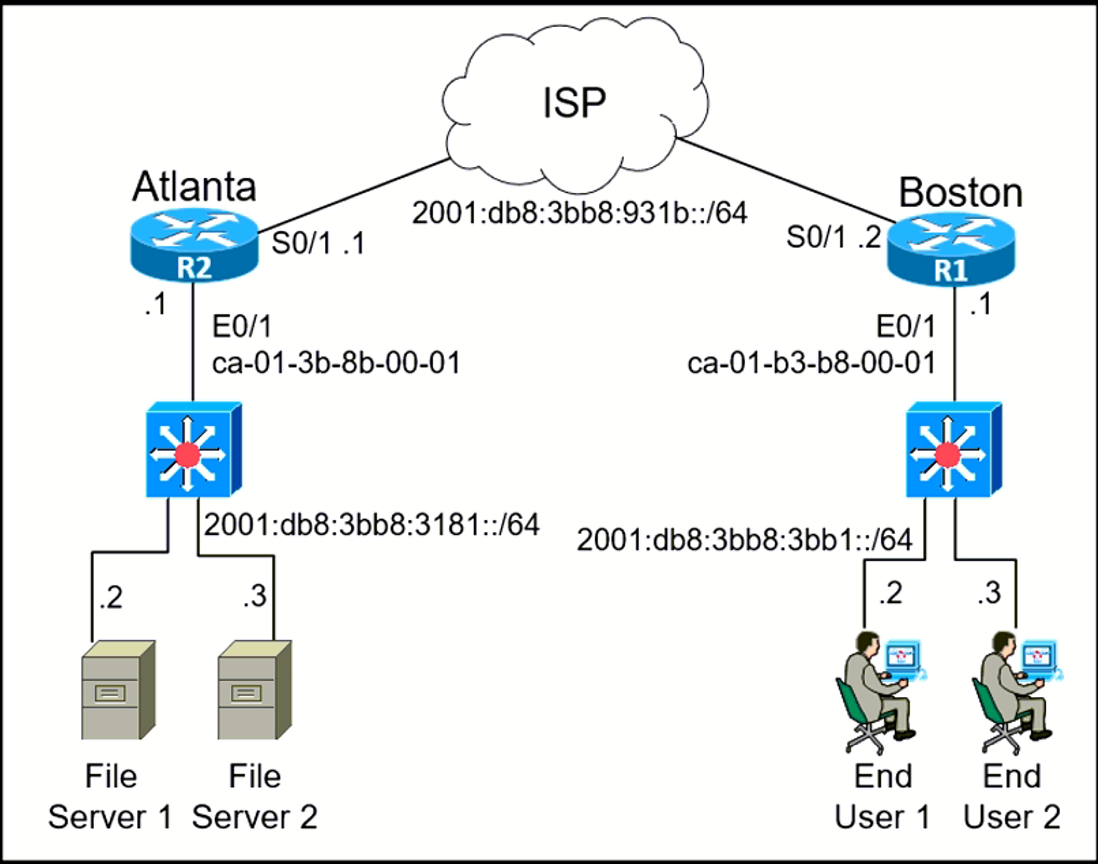
Community Votes
100% of anonymous learners picked answer D. Votes are pick records left by other test-takers — they are not the verified answer.
Community Insight
The FFFE marker and the inverted seventh bit are what make a correct EUI-64 address recognizable among the answer options.
EUI-64 builds the 64-bit interface ID from the 48-bit MAC: split the MAC at the OUI/host boundary, insert FFFE in the middle, and flip the seventh bit (U/L bit) of the first byte. The result appends to the configured /64 prefix.
Forgetting to invert the seventh bit or misplacing FFFE. A correct EUI-64 always shows FFFE in the fourth hextet; options lacking it are wrong.
Community Discussion (5 comments)
Comments & Corrections
No comments yet — spotted an error or have a note? Share it below.
Expert Analysis
Why the Answer Is Correct
D is correct. EUI-64 takes the 48-bit MAC, splits it, inserts FFFE between the OUI and host halves, and inverts the universal/local bit (the seventh bit of the first byte). The resulting interface ID 2001:db8:3bb8:3bb1:C801:B3FF:FEB8:1 is the only option containing FFFE in the expected position.Why the Other Options Are Wrong
A, B, and C are wrong because they lack the FFFE insertion that EUI-64 always places in the fourth hextet, or they fail to reflect the inverted seventh bit. EUI-64 addressing is deterministic, so any option without FFFE cannot be produced by the router.Community Comment Notes
Commenters note D is "the only answer with FFFE in it," and one explains the seventh-bit flip using a hex table. The community consensus (89 votes for D) aligns with the EUI-64 rule.Official Reference
Related Analysis
Practice All 200-301 Questions
Access 220 questions with complete answers and detailed explanations.
View Full 200-301 Practice Test →