Computing the EUI-64 Interface ID for a Given MAC Address

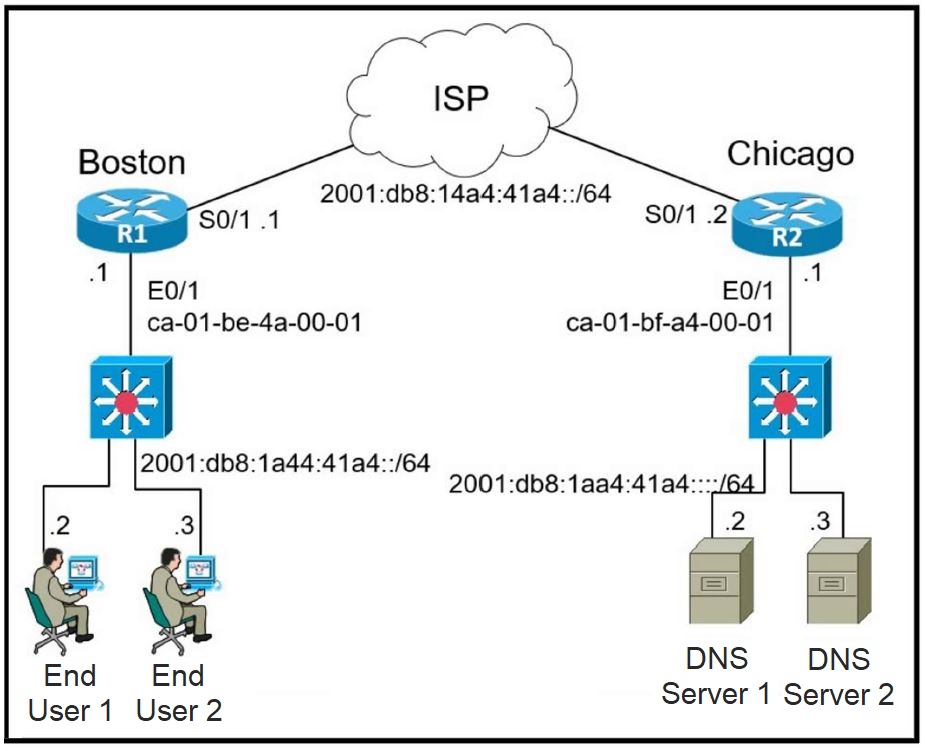
Answer Correct answer: B — Splitting the MAC, inserting FFFE, and inverting the seventh bit yields 2001:db8:1a44:41a4:C801:BEFF:FE4A:1.

Refer to the exhibit. The IPv6 address for the LAN segment on router R1 must be configured using the EUI-64 format. When configured which ipv6 address is produced by the router? - image
  1. 2001:db8:1a44:41a4:C081:BFFF:FE4A:1
  2. 2001:db8:1a44:41a4:C801:BEFF:FE4A:1 Correct Answer
  3. 2001:db8:1a44:41a4:4660:592F:FE65:1
  4. 2001:db8:1a44:41a4:C800:BAFE:FF00:1

Community Votes

B
71%
A
29%

71% of anonymous learners picked answer B. Votes are pick records left by other test-takers — they are not the verified answer.

Community Insight

C801 (not C081 or C201) reflects the inverted seventh bit of the source MAC's first octet; the BEFF hextet is the FFFE filler.

EUI-64 converts the 48-bit MAC into a 64-bit interface ID by splitting it, inserting FFFE, and inverting the seventh bit of the first byte. Here that inversion turns the first octet into C8 (not C2), placing C801 in the third hextet and BEFF (FFFE) in the fourth.

Picking A or C because they contain FFFE alone — the seventh-bit inversion must also be applied, otherwise the first hextet is wrong.

Community Discussion (11 comments)

[Removed] 👍 6
Keba889 2 weeks, 3 days ago B is correct because C= 1100 a=1010 (after converting the 7th bit, this becomes 1000 = 8 Hence, C8 (not C2) so the final correct answer is: 2001:db8:1a44:41a4:C801:BEFF:FE4A:1
bymrdas 👍 1 Selected: B
correct
Oluwasheeun 👍 1 Selected: B
B is correct
Keba889 👍 2
B is correct because C= 1100 a=1010 (after converting the 7th bit, this becomes 1000 = 8 Hence, C8 (not C2) so the final correct answer is: 2001:db8:1a44:41a4:C801:BEFF:FE4A:1 (If this is incorrect, please explain why.) Thanks
xplinty666 👍 1 Selected: A
For me the correct is A
lmmujsi 👍 2 Selected: B
Comparing this with the options provided: A. 2001:db8:1a44:41a4:C081:BFFF:FE4A:1 - This is incorrect because C081 should be C201. B. 2001:db8:1a44:41a4:C801:BEFF:FE4A:1 - This is incorrect because C801 should be C201. C. 2001:db8:1a44:41a4:4660:592F:FE65:1 - This is incorrect as it doesn't correlate with the EUI-64 modification of the provided MAC address. D. 2001:db8:1a44:41a4:C800:BAFE:FF00:1 - This is incorrect because C800:BAFE doesn't match the MAC address after applying EUI-64 modification. However, none of the given options exactly matches the expected result. The closest option is B, but it has an incorrect octet C801 instead of C201. There could be a typo in the options or in the understanding of the MAC address manipulation. Please double-check the available options and the process to ensure accuracy.
DaimonANCC 👍 2
if A if right, where going letter E??? BEFF?
KuyaErik101 👍 1 Selected: A
but is should be c801:bfff:fea4:1 another typo error
ModernSisyphus 👍 1
A is correct
ladarius01 👍 3
Given answer is correct. Split MAC and insert FFFE then invert 7th bit which makes A(1010) - > 8(1000)
Crawl_SC 👍 2
A is the correct answer

Comments & Corrections

No comments yet — spotted an error or have a note? Share it below.

Log in to comment, report an error, or add a note about this question.

Submitted for moderation before publishing. Keep it helpful and respectful.

Expert Analysis

Why the Answer Is Correct

B is correct. Applying EUI-64 to the exhibited MAC: split at the OUI/host boundary, insert FFFE, and flip the seventh bit of the first byte (C becomes 8 after the U/L flip). The deterministic result is 2001:db8:1a44:41a4:C801:BEFF:FE4A:1, matching option B exactly.

Why the Other Options Are Wrong

A is wrong: its first hextet C081 ignores the seventh-bit inversion (should be C8xx). C is wrong: it does not follow the EUI-64 transformation of the provided MAC at all. D is wrong: C800:BAFE:FF00 drops the FFFE marker and mis-derives the host half.

Community Comment Notes

Top commenters (71 votes for B) walk through the C8 derivation: "after converting the 7th bit, this becomes 1000 = 8, hence C8 (not C2)." Others confirm splitting the MAC and inserting FFFE then inverting the bit.

Official Reference

Related Analysis

Practice All 200-301 Questions

Access 220 questions with complete answers and detailed explanations.

View Full 200-301 Practice Test →

← Back to 200-301 Study Guide