How does Contoso Confidential label encryption affect access?
HOTSPOT
You have a Microsoft 365 subscription that contains a sensitivity label named Contoso Confidential.
You publish Contoso Confidential to all users.
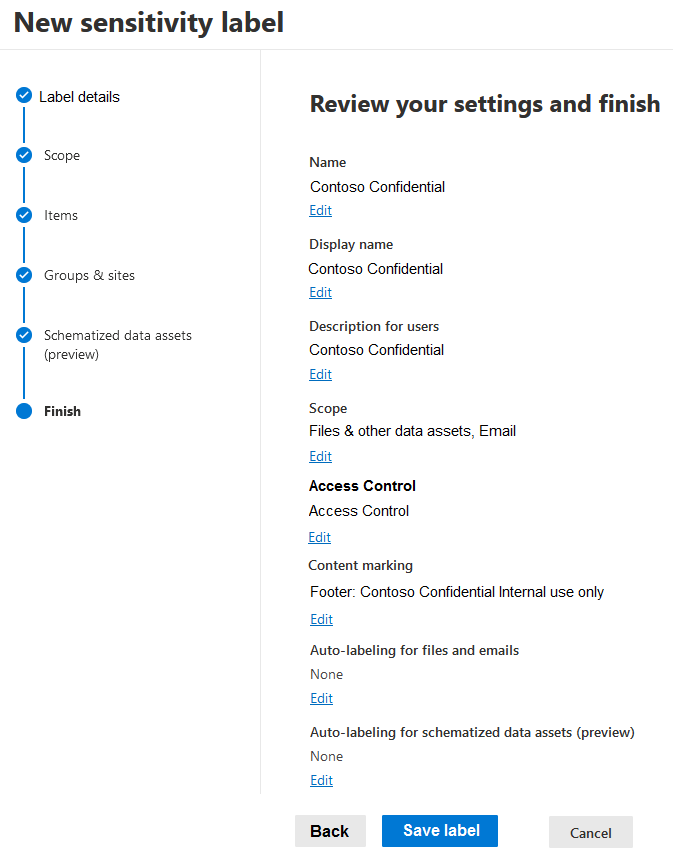
Contoso Confidential is configured as shown in the Configuration exhibit. (Click the Configuration tab.)
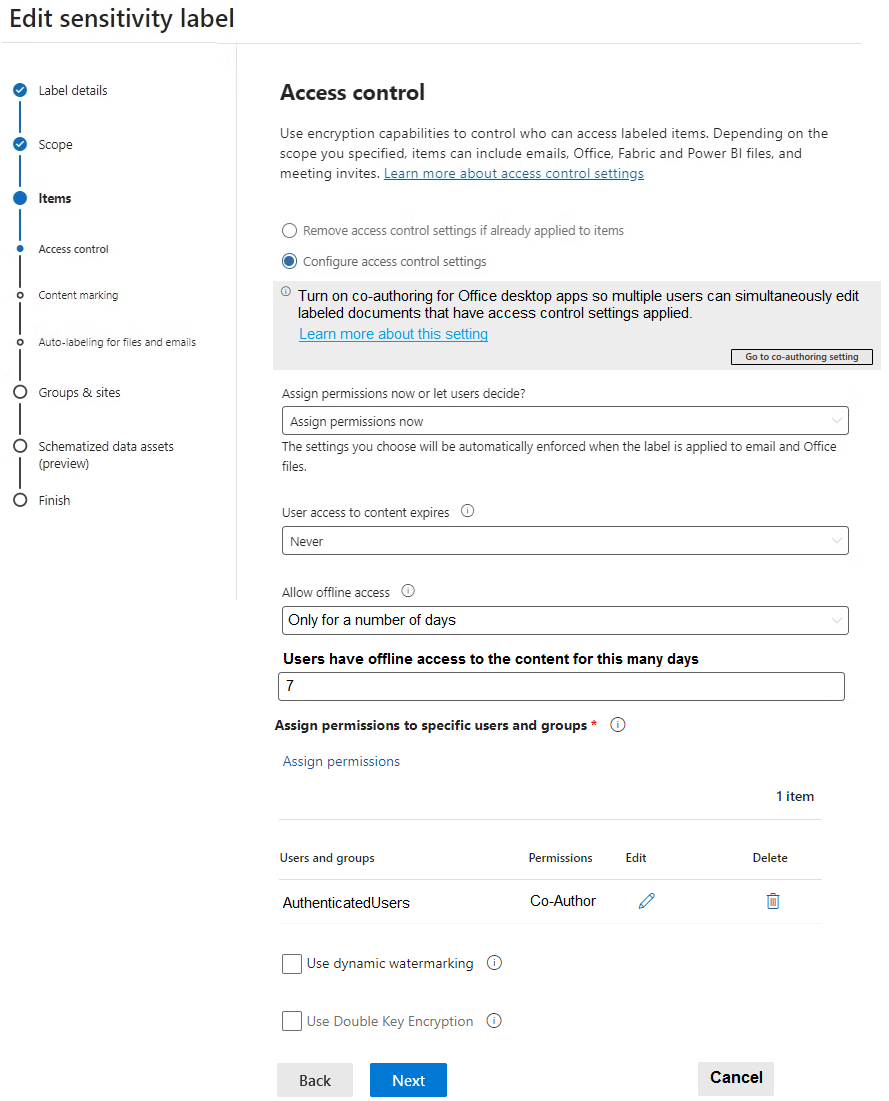
 The Access control settings of Contoso Confidential are configured as shown in the Access control exhibit. (Click the Access control tab.)
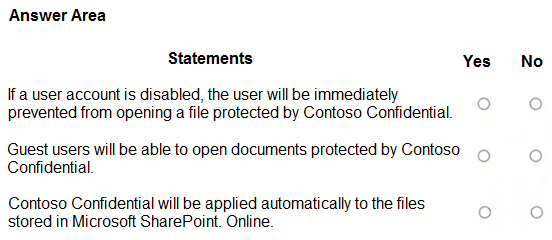
 For each of the following statements, select Yes if the statement is true. Otherwise, select No.
NOTE: Each correct selection is worth one point.
For each of the following statements, select Yes if the statement is true. Otherwise, select No.
NOTE: Each correct selection is worth one point.
Community Insight
The exam tests the difference between a label’s online authorization check and its cached offline use license, plus who counts as Authenticated Users and whether the label scope auto-applies to SharePoint.
This hotspot tests how a Microsoft Purview sensitivity label named Contoso Confidential behaves when encryption grants rights to Authenticated Users and allows seven days of offline access. It establishes the correct hotspot pattern as No, Yes, No: disablement is not immediate revocation, guests are authenticated, and SharePoint automatic labeling is not enabled by this configuration.
The common error is treating account disablement as an instant kill switch for already-issued label use licenses; the seven-day offline setting means access can persist until the license expires or refreshes.
Community Discussion (6 comments)
Comments & Corrections
No comments yet — spotted an error or have a note? Share it below.
Expert Analysis
Why the Answer Is Correct
The label grants encryption rights to Authenticated Users and permits offline access for seven days, so a user who already opened the protected file may keep using a cached use license after the account is disabled. That makes the immediate-blocking statement false: revocation is not guaranteed until the offline period expires or the license cache refreshes. Guest accounts authenticate through Entra ID or a federated/Microsoft identity, so they fall within Authenticated Users for this permission set, making the guest-access statement true. The SharePoint-related statement is false because the configuration does not enable automatic application to SharePoint content, and the Groups & sites scope is not selected where relevant. The resulting hotspot pattern is No, Yes, No.Why Other Candidate Answers Are Wrong
Answering Yes to the disabled-account statement assumes a real-time check every time the file opens, which contradicts the seven-day offline use license configured on Contoso Confidential. Answering No to guest access wrongly treats guests as anonymous users; they are authenticated identities and receive the label’s Authenticated Users rights. Answering Yes to the SharePoint statement assumes auto-labeling or site scope that the exhibits do not show. The minority NYY view correctly recognizes persistent offline access but overreaches by granting SharePoint behavior that is not configured.Community Comment Notes
skalolaz summarized the pattern as NYN and noted "guest users are authenticated users", which matches the label’s Authenticated Users permission. kollyp2000 reached No, Yes, No and focused on the "Allow offline access" setting, explaining that the use license controls when reauthentication occurs. Xarou made the same point about the "offline period expires, or the license cache refreshes", while Eltooth tied the third No to "SharePoint is not listed in scope". Ender3 argued for a different first answer and cited "no auto-labeling policy was set" for the third statement; TDAC’s NYY reflects a minority view that overextends the offline-access behavior to the SharePoint statement.Official Reference
Exam Strategy
Read the label’s encryption and offline-access settings before judging any “immediate revocation” statement; cached use licenses often outlive account changes. Then verify whether the statement concerns guests, who are authenticated, versus SharePoint auto-labeling or site scope, which require separate configuration.
Frequently Asked Questions
Why does disabling a user account not immediately block a labeled file with 7-day offline access?
The label issues a use license that remains valid for the offline period, so the user is not reauthenticated on every open until that license expires or refreshes.
Are Microsoft Entra guest users included in the Authenticated Users permission on a sensitivity label?
Yes. Guests authenticate through Entra ID or a federated identity, so they are authenticated users and receive the label's permitted rights unless explicitly excluded.