Deploy Custom Speech Model on Docker Host
DRAG DROP
You have a Docker host named Host1 that contains a container base image.
You have an Azure subscription that contains a custom speech-to-text model named model1.
You need to run model1 on Host1.
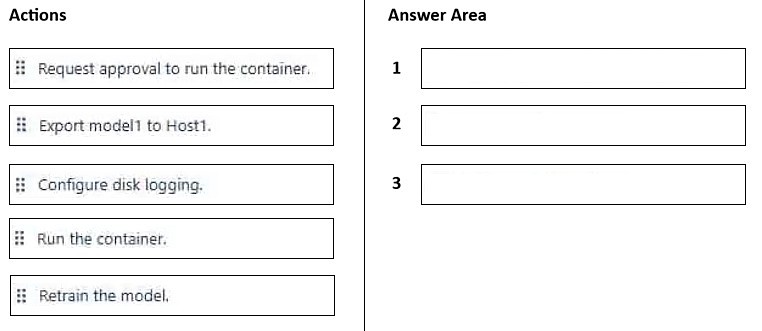
Which three actions should you perform in sequence? To answer, move the appropriate actions from the list of actions to the answer area and arrange them in the correct order.
Community Insight
The key trap is assuming direct deployment; Azure AI Speech containers require explicit approval from Microsoft before any image can be pulled or run.
This scenario addresses the deployment of a custom Azure AI Speech model on an external Docker host, focusing on the specific access control and containerization steps required.
Learners often attempt to export and run the model immediately, failing to recognize that Azure AI Speech services are gated behind a mandatory access request process.
Community Discussion (2 comments)
Comments & Corrections
No comments yet — spotted an error or have a note? Share it below.
Expert Analysis
Why the Answer Is Correct
To run a custom speech-to-text model (model1) on an external Docker host (Host1), you must first obtain permission from Microsoft because Azure AI Speech containers are not publicly available by default. The correct sequence begins with requesting approval to run the container. Once approved, you can export the model artifacts to the host. Finally, you run the container using the exported model. This ensures compliance with Azure's distribution policies for specialized AI models.Why Other Candidate Answers Are Wrong
Actions like 'Run Container' or 'Export Model' cannot occur before 'Request Approval' because the container image is not accessible without it. Attempting to configure disk logging or other operational settings before the container is successfully running and approved is premature and logically invalid in this deployment workflow.Community Comment Notes
As Srikantha noted, the steps involve requesting approval, exporting the model, and then running the container. Another user, Kalut, suggested exporting, running, and configuring logging, which misses the critical initial approval step required for Azure AI Speech services.Exam Strategy
Remember that Azure AI Speech containers are 'gated' services. Always look for 'Request Access' or 'Submit Form' as a prerequisite step before any technical deployment actions like pulling images or running containers.
Frequently Asked Questions
Why do I need approval to run Azure AI Speech containers?
Azure AI Speech containers are considered gated services. Microsoft requires users to submit an access request form to ensure they meet usage criteria before providing the container image.
Can I use a standard speech container without approval?
Standard speech containers may have different availability, but custom models and specific enterprise features often require explicit approval. Always check the specific documentation for the model type you are deploying.
Related Analysis
Practice All AI-103 Questions
Access 88 questions with complete answers and detailed explanations.
View Full AI-103 Practice Test →