Microsoft Sentinel Incident Correlation
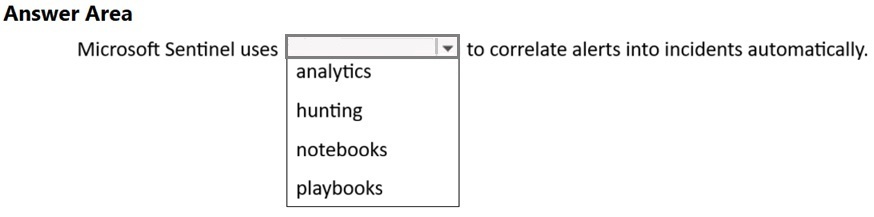
HOTSPOT
Select the answer that correctly completes the sentence.
Community Insight
The core concept tested is that Microsoft Sentinel automatically groups individual alerts into single, actionable security incidents rather than leaving them as isolated events.
This SC-900 hotspot question tests the ability to identify how Microsoft Sentinel correlates alerts into actionable incidents using analytics rules and built-in correlation engines.
Learners often mistakenly believe that alerts remain uncorrelated or require manual grouping, failing to recognize Sentinel's automated Fusion and multistage attack detection capabilities.
Community Discussion (2 comments)
Comments & Corrections
No comments yet — spotted an error or have a note? Share it below.
Expert Analysis
Why the Answer Is Correct
Microsoft Sentinel is designed to ingest vast amounts of data and use analytics rules to correlate related alerts. The correct completion identifies that Sentinel uses these analytics rules and built-in correlation engines (such as Fusion) to group individual alerts into single, actionable security incidents.Why Other Candidate Answers Are Wrong
Any answer suggesting that alerts are manually grouped, remain uncorrelated, or are handled by other tools like Defender XDR without Sentinel's specific incident management features would be incorrect. The key differentiator is Sentinel's automated correlation capability.Community Comment Notes
Community comments confirm that Microsoft Sentinel uses analytics rules and incident settings to group and correlate related alerts. One user noted that Sentinel uses built-in correlation engines like Fusion and advanced multistage attack detection to automatically group individual alerts into single, actionable security incidents, which aligns with the official functionality.Exam Strategy
Focus on understanding the automation features of Microsoft Sentinel, particularly how it transforms raw alerts into structured incidents using analytics rules and correlation engines like Fusion.
Frequently Asked Questions
How does Microsoft Sentinel correlate alerts?
It uses analytics rules and built-in correlation engines like Fusion to group related alerts into single incidents.
What is the role of Fusion in Sentinel?
Fusion is a correlation engine that detects multi-stage attacks by correlating alerts across different data sources.
Related Analysis
Practice All SC-900 Questions
Access 141 questions with complete answers and detailed explanations.
View Full SC-900 Practice Test →