Which Port Should Be Disabled to Ensure Encrypted Web Server Connections?
A company is hosting a secure server that requires all connections to the server to be encrypted. A junior administrator needs to harden the web server. The following ports on the web server are open: Which of the following ports should be disabled? - 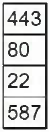
Community Votes
100% of anonymous learners picked answer B. Votes are pick records left by other test-takers — they are not the verified answer.
Community Insight
The question tests your ability to match common services to their ports and identify that port 80 (HTTP) is the only plaintext web port in the list, while ports 22, 443, and 587 all use encryption or secure protocols.
For a secure web server that requires encrypted connections, the open port that must be disabled is port 80 because HTTP is unencrypted, while port 443 serves HTTPS. Community consensus overwhelmingly supports answer B, with commenters explaining that port 80 is the unsecured counterpart of port 443.
A common wrong answer is C. 443, because some candidates mistakenly classify HTTPS as unnecessary or think the 'secure' server must only use HTTPS and question whether 443 is 'extra'; however, 443 is the encrypted web port that must remain open, and the plaintext port 80 is the one that should be disabled.
Community Discussion (3 comments)
Comments & Corrections
No comments yet — spotted an error or have a note? Share it below.
Expert Analysis
Why the Answer Is Correct
The company requires all connections to the web server to be encrypted. Port 80 is used for HTTP, which transmits data in plaintext and violates this requirement. Disabling port 80 leaves HTTPS (port 443) as the standard encrypted web service, ensuring web traffic is encrypted. Commenters explicitly state that "port 80 is the unsecured version of port 443" and that disabling it "would ensure that all web traffic to the server is encrypted, typically via HTTPS on port 443."
Why the Other Options Are Wrong
Port 22 is SSH, a secure remote-administration protocol that provides encrypted connections, so it does not violate the requirement and can remain open for management if needed. Port 443 is HTTPS, which is exactly the encrypted web service the company needs, so it must stay enabled. Port 587 is SMTP submission, commonly encrypted with STARTTLS, but it is not a standard web port; the key issue is that the only unencrypted web port in the list is port 80. One commenter suggested C (443), but that choice would disable encryption rather than harden the server.
Community Comment Notes
The community strongly supports answer B, with 100 votes for that option. Comment 1 says the answer should be B because port 80 is the unsecured version of port 443. Comment 2 adds that port 80 is used for HTTP, which is unencrypted web traffic, so disabling it ensures all web traffic is encrypted via HTTPS on port 443. The single comment suggesting C. 443 is an outlier and is incorrect because 443 is the secure HTTPS port that must not be disabled.
Official Reference
Exam Strategy
On port and protocol questions, identify whether each service is plaintext or encrypted. If the requirement says 'all connections must be encrypted,' look for the standard insecure web port (port 80) as the answer to disable, not the secure HTTPS port (443).