Improving vPC Convergence with the vPC Peer-Switch Feature and Matching STP Priority

Apply switching protocols such as RSTP+, LACP and vPC
Answer Correct answer: B — Configure the same STP priority on both vPC switches.

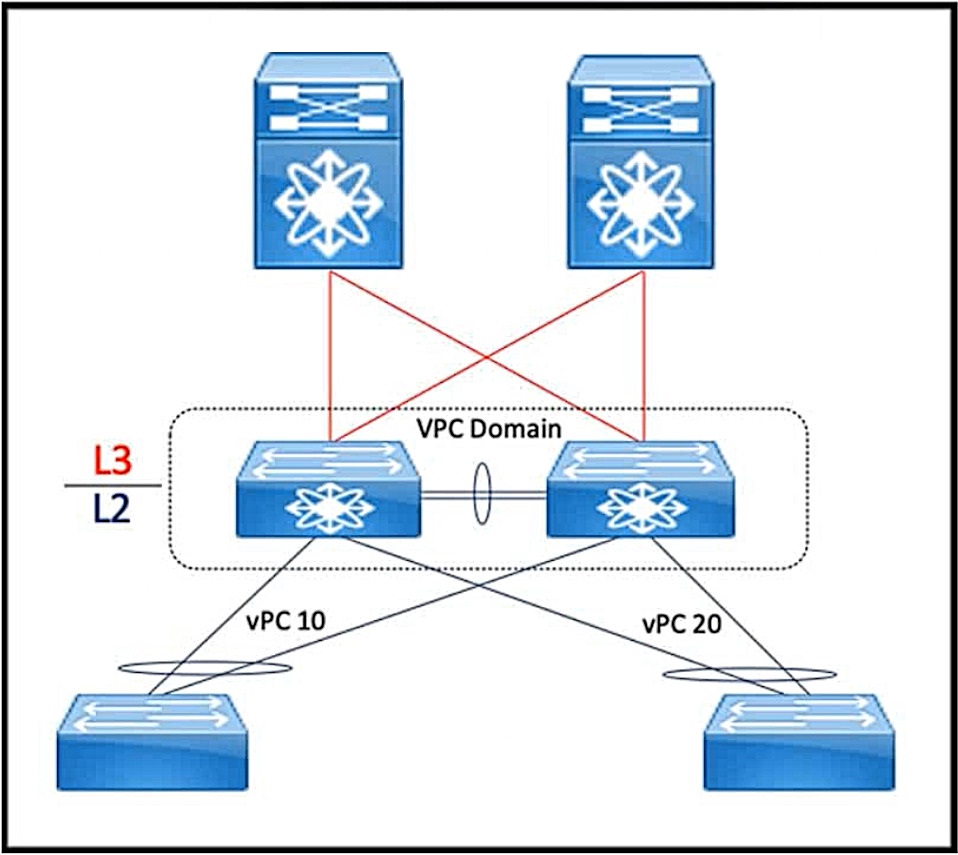
Refer to the exhibit. A network engineer must improve the convergence time during vPC primary peer device failure and recovery. Which set of actions is required on both vPC switches to accomplish this task? - image
  1. Configure the same system priority.
  2. Configure the same STP priority. Correct Answer
  3. Configure vPC role priority.
  4. Configure port channels with BPDU guard.

Community Votes

B
100%

100% of anonymous learners picked answer B. Votes are pick records left by other test-takers — they are not the verified answer.

Community Insight

The vPC peer-switch feature lets both Nexus 9000 devices act as a single STP root. A hard requirement: the Spanning Tree priority for all VLANs must be identical on both peers. This removes the need to pin the STP root to the primary and avoids a topology change on primary failure.

To improve convergence when the vPC primary fails, enable the vPC peer-switch feature and configure the same STP priority on both vPC peers so they appear as a single STP root, eliminating root re-election and speeding recovery.

Setting the same system priority (A, that is LACP) or vPC role priority (C, that elects primary/secondary, not STP). The convergence improvement comes from STP root stability via matched STP priority plus peer-switch.

Community Discussion (5 comments)

samfab 👍 1 Selected: B
The vPC peer switch is introduced to address performance concerns around these STP convergence events. This feature allows a pair of Cisco Nexus 7000 Series devices to appear as a single STP root in the Layer 2 topology. In the vPC peer switch mode, STP BPDUs are sent from both vPC peer devices.
GoForCCNP 👍 2 Selected: B
Answer B is right. In addition to Arch_Angel's explanation, see link below: "Before enabling a vPC peer switch the Spanning Tree priority for all the VLANs MUST BE the same on both vPC peer devices." https://community.cisco.com/kxiwq67737/attachments/kxiwq67737/4436-docs-data-center/727/1/90028-vPC%20Peer%20Switch%20Deployment%20Options.pdf
gaz1978 👍 1 Selected: B
Arch_angel is right
Arch_Angel 👍 4
Answer is B vPC Peer Switch The vPC peer switch feature was added to Cisco NX-OS to address performance concerns around STP convergence. This feature allows a pair of Cisco Nexus 9000 Series devices to appear as a single STP root in the Layer 2 topology. This feature eliminates the need to pin the STP root to the vPC primary switch and improves vPC convergence if the vPC primary switch fails. To avoid loops, the vPC peer link is excluded from the STP computation. In vPC peer switch mode, STP BPDUs are sent from both vPC peer devices to avoid issues related toSTP BPDU timeout on the downstream switches, which can cause traffic disruption. This feature can be used with the pure peer switch topology in which the devices all belong to the vPC.
SysAd 👍 1
Answer is B, peer-switch

Comments & Corrections

No comments yet — spotted an error or have a note? Share it below.

Log in to comment, report an error, or add a note about this question.

Submitted for moderation before publishing. Keep it helpful and respectful.

Expert Analysis

Why the Answer Is Correct

The vPC peer-switch feature addresses STP convergence concerns by making the pair appear as a single STP root. Before enabling it, "the Spanning Tree priority for all the VLANs MUST BE the same on both vPC peer devices." Matching STP priority is the required action to improve convergence on primary failure.

Why the Other Options Are Wrong

A. System priority is the LACP port-channel parameter, unrelated to STP convergence. C. vPC role priority elects which device is primary/secondary, not the STP root. D. BPDU guard on port-channels is an edge-protection feature, not convergence tuning.

Community Comment Notes

Community: "Answer is B vPC Peer Switch... Before enabling a vPC peer switch the Spanning Tree priority for all the VLANs MUST BE the same on both vPC peer devices." Votes B 100.

Official Reference

Related Analysis

← Back to 350-601 Study Guide