Dynamic NAT-PT Connects the IPv6 Island to IPv4 Services
Refer to the exhibit. An engineer must connect the IPv6 island to the IPv4-only network to provide IPv6 hosts access to file servers and DNS services in the IPv4 network. Which NAT should the engineer choose? - 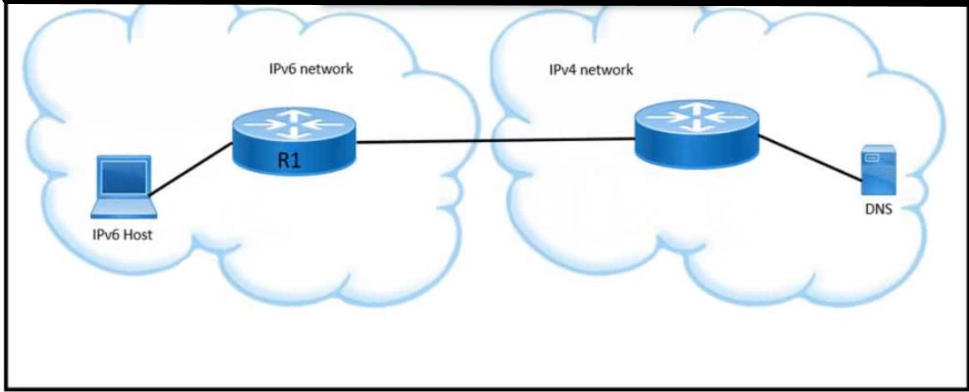
Community Votes
100% of anonymous learners picked answer C. Votes are pick records left by other test-takers — they are not the verified answer.
Community Insight
NAT-PT is the IPv6-to-IPv4 translation mechanism (unlike NAT66, which is IPv6-to-IPv6). Dynamic (pooled) NAT-PT suits many hosts reaching shared IPv4 services; static is for fixed one-to-one.
To let IPv6-only hosts reach IPv4 file servers and DNS, the engineer uses NAT-PT. Dynamic NAT-PT maps many IPv6 sources to a pool of IPv4 addresses as sessions start, which fits outbound host-to-service access better than a static one-to-one mapping.
Picking A/B (NAT66): NAT66 translates between IPv6 addresses, not IPv6 to IPv4, so it cannot bridge the IPv6 island to the IPv4 network. The translation type here is NAT-PT.
Community Discussion (3 comments)
Comments & Corrections
No comments yet — spotted an error or have a note? Share it below.
Expert Analysis
Why the Answer Is Correct
C is correct. NAT-PT is the IPv6/IPv4 translation mechanism, and dynamic NAT-PT draws from a pool so many IPv6 hosts can reach IPv4 services (file servers, DNS) as they initiate outbound sessions.Why the Other Options Are Wrong
A and B (stateless/stateful NAT66) translate between IPv6 addresses only; they do not bridge IPv6 to IPv4, so they cannot give the island access to the IPv4 network. D (static NAT-PT) is a fixed one-to-one mapping, which does not scale to many hosts needing outbound access.Community Comment Notes
The vote is C (86). The top comment states dynamic NAT-PT fits because the traffic is outbound from host to DNS/file services.Related Analysis
Practice All 300-420 Questions
Access 150 questions with complete answers and detailed explanations.
View Full 300-420 Practice Test →