Troubleshooting Asymmetric Traffic on Google Cloud Interconnect
You have the networking configuration shown in the diagram. Two VLAN attachments associated with two Dedicated Interconnect connections terminate on the same Cloud Router (mycloudrouter). The Interconnect connections terminate on two separate on-premises routers. You advertise the same prefixes from the Border Gateway Protocol (BGP) sessions associated with each of the VLAN attachments. You notice an asymmetric traffic flow between the two Interconnect connections. Which of the following actions should you take to troubleshoot the asymmetric traffic flow? - 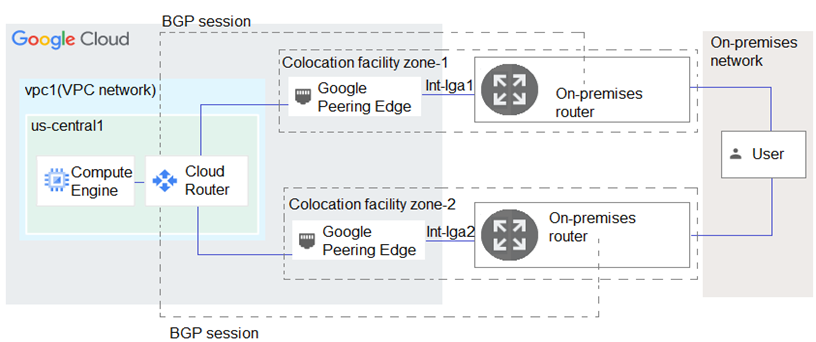
Community Votes
47% of anonymous learners picked answer C. Votes are pick records left by other test-takers — they are not the verified answer.
Community Insight
Tests identification of the correct diagnostic interface for dynamic BGP state verification while filtering out syntactically flawed CLI commands.
This question evaluates your ability to diagnose BGP session asymmetry on Dedicated Interconnect using Google Cloud's native tools. Community consensus strongly recommends the Cloud Console BGP session viewer, as CLI alternatives in this specific question contain intentional syntax traps.
Option B is frequently selected because it references the correct underlying diagnostic command, but candidates miss the deliberate CLI syntax error that renders it invalid during the exam.
Community Discussion (8 comments)
Comments & Corrections
No comments yet — spotted an error or have a note? Share it below.
Expert Analysis
Why the Answer Is Correct
Option C leverages the Google Cloud Console to inspect active BGP sessions, providing immediate visibility into peer states, advertised routes, and next-hop attributes. This graphical interface aligns with official troubleshooting methodologies for hybrid connectivity, allowing engineers to quickly confirm whether both VLAN attachments are establishing symmetric BGP peering. By visualizing session health and route advertisements, administrators can pinpoint configuration drift or policy mismatches causing asymmetric traffic.Why the Other Options Are Wrong
Option A relies on VPC Flow Logs, which capture packet-level telemetry but cannot diagnose BGP session establishment failures or routing policy discrepancies. Option B references the correct get-status functionality but includes malformed flag syntax, making it technically invalid and unsuitable for exam selection. Option D utilizes routers describe, which outputs static infrastructure configuration rather than dynamic routing table data required for active path analysis.Community Comment Notes
Several candidates explicitly called out the syntax error in Option B, highlighting that exam questions often embed these traps to test precision [1][3]. Debates centered on whether get-status or describe was superior, with experts clarifying that session state trumps static config for this scenario [2][6]. The majority agreed that the console navigation path mirrors Google's documented support workflow for interconnect diagnostics.Official Reference
Exam Strategy
Always verify CLI command syntax carefully; even minor flag misplacements can invalidate an otherwise correct technical approach. When troubleshooting dynamic routing issues like BGP asymmetry, prioritize tools that display real-time session states and learned routes over static configuration dumps or packet logs.
Related Analysis
Practice All PCNE Questions
Access 80 questions with complete answers and detailed explanations.
View Full PCNE Practice Test →