How to Enable VPC Flow Logs for Subnet-2 in Shared VPC?
You have the following Shared VPC design. VPC Flow Logs is configured for Subnet-1 in the host VPC. You also want to monitor flow logs for Subnet-2. What should you do? - 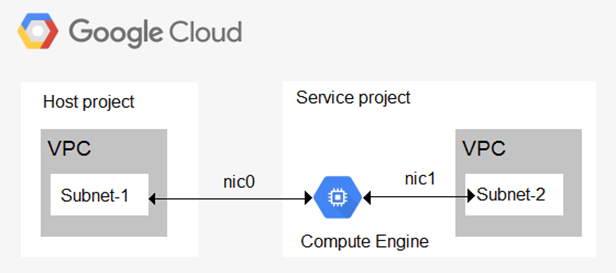
Community Votes
62% of anonymous learners picked answer B. Votes are pick records left by other test-takers — they are not the verified answer.
Community Insight
Examines the boundary between host and service project networking, testing whether candidates recognize that flow logs are scoped to individual VPCs rather than automatically aggregated across Shared VPC hierarchies.
Configuring VPC Flow Logs requires enabling logging at the specific VPC level where traffic originates. Community consensus confirms that since Subnet-2 resides in a separate service project VPC, flow logs must be explicitly configured there rather than relying on host project settings.
Option A is the most frequent incorrect choice, stemming from a misinterpretation of Google Cloud documentation regarding host-project log consolidation; this rule only applies when subnets are actually attached to the host VPC, not to independent service project networks.
Community Discussion (10 comments)
Comments & Corrections
No comments yet — spotted an error or have a note? Share it below.
Expert Analysis
Why the Answer Is Correct
VPC Flow Logs operate at the VPC network level, meaning each distinct VPC requires its own logging configuration. Since Subnet-2 is located in a separate service project VPC, enabling flow logs there directly captures its traffic metadata. This approach aligns with Google Cloud architecture where logging scope matches the VPC boundary, ensuring accurate monitoring for resources outside the host project.Why the Other Options Are Wrong
Option A fails because filtering alone cannot generate logs for a VPC where logging is disabled, and cross-project filtering does not bypass the initial collection requirement. Option C introduces Packet Mirroring, which duplicates raw packets for analysis rather than collecting structured flow metadata efficiently. Option D modifies firewall rules, which controls traffic allowance but has no impact on logging collection or visibility.Community Comment Notes
Multiple candidates highlighted that the diagram depicts two entirely separate VPCs, confirming that Subnet-2 belongs to the service project network. Commenters noted that compute instances cannot span multiple VPCs within the same project, reinforcing the architectural separation. While some cited official documentation about host-project log consolidation, others clarified that this rule strictly applies to subnets actually provisioned under the host VPC, not independent service networks.Official Reference
Exam Strategy
Always verify which project owns the VPC containing your target subnet before selecting logging options. Remember that VPC Flow Logs must be enabled at the network level first, as filters or mirroring are secondary configurations that cannot replace initial logging activation.
Related Analysis
Practice All PCNE Questions
Access 80 questions with complete answers and detailed explanations.
View Full PCNE Practice Test →