What Port Must Be Disabled When a Web Server Must Only Allow Encrypted Connections?
A company is hosting a secure server that requires all connections to the server to be encrypted. A junior administrator needs to harden the web server. The following ports on the web server are open: Which of the following ports should be disabled? - 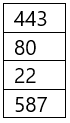
Community Votes
100% of anonymous learners picked answer B. Votes are pick records left by other test-takers — they are not the verified answer.
Community Insight
The exam tests recognition that HTTP port 80 is plaintext and must be disabled when encryption is required; the common trap is assuming secure web is configured solely on 443 and overlooking that encrypted services like SSH (22) and SMTPS (587) are legitimate secure ports.
This CompTIA Network+ N10-009 question asks which open port on a web server must be disabled to enforce encrypted-only connections. The community agrees that port 80 (HTTP) should be disabled because it is unencrypted, while ports 22, 443, and 587 are secure services.
A common mistake is to confuse port 80 as a more commonly used web port without realizing it is unencrypted HTTP; candidates may also mistakenly think port 22 or 587 is insecure, but those support encrypted protocols and should not be disabled.
Community Discussion (4 comments)
Comments & Corrections
No comments yet — spotted an error or have a note? Share it below.
Expert Analysis
Why the Answer Is Correct
The server is explicitly required to accept only encrypted connections. HTTP, which operates on port 80, sends data in cleartext and therefore violates that requirement. Disabling port 80 forces web clients to use HTTPS (port 443) for encrypted communication, matching the hardening goal. Community comments [1] and [3] correctly note that port 80 is insecure unencrypted HTTP traffic.
Why the Other Options Are Wrong
Port 22 is SSH, an encrypted remote administration protocol, and is secure. Port 443 is HTTPS/TLS, the encrypted version of HTTP used by secure web servers. Port 587 is the email submission port commonly protected by STARTTLS/SMTPS, so it is not the unsecure port; comment [1] correctly groups it with the secure ports. Therefore, none of these ports should be disabled solely to enforce encrypted web traffic.
Community Comment Notes
All commenters, including [1], [2], [3], and [4], select B and explain that port 80 is the only unsecure option. Comment [1] reinforces that 22, 443, and 587 are all secure implementations. The consistent consensus and reasoning align with CompTIA port security objectives.
Official Reference
Exam Strategy
Remember that "secure server" and "all connections encrypted" means unencrypted protocols like HTTP (port 80) must be removed. Learn the default ports for encrypted services (22, 443, 587/465) so you can quickly spot the one plaintext protocol in any hardening scenario.
Related Analysis
Practice All N10-009 Questions
Access 100 questions with complete answers and detailed explanations.
View Full N10-009 Practice Test →