Using Logical Functions to Flag Records Based on Conditions
Short answer
B Logical functions should be used to flag customers by evaluating conditional statements against the purchase data.
Question
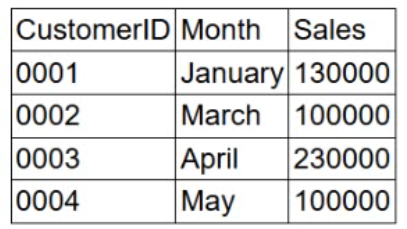
Which of the following types of functions should the professional use to flag the customers?
Key Takeaways
The main trap is confusing Date functions with Logical functions; while dates provide the criterion, Logical functions perform the conditional evaluation required to 'flag' or mark the records.
This guide explains why Logical functions are the correct choice for flagging customer records based on specific conditions, such as purchase month, in the DA0-002 exam.
Common mistake: Choosing Date functions (D) because the criterion involves a month. While date functions extract date components, the actual 'flagging' action relies on logical operators to apply the condition and return a boolean or label.
Expert Analysis
The core concept here is Data Transformation, specifically applying functions to manipulate or evaluate data values. The scenario requires identifying a subset of records based on a specific condition: the purchase month being January.
When examining the options, we must distinguish between the nature of the data and the type of operation required to "flag" it. Flagging typically implies creating a binary indicator (e.g., True/False, 1/0) based on whether a condition is met. This is fundamentally a conditional evaluation.
While one comment argues for Date functions because the target is a month, this assumes the source data is in a standard date format that can be parsed. However, another comment points out a critical detail often present in such exam exhibits: if the column contains text strings like "January" rather than date objects, date functions would fail or be inappropriate. More importantly, even if the data were dates, the act of flagging based on a condition is logically executed via logical structures (IF/CASE). But let's look closer at the options provided in the context of Data Analysis tools (like Excel or SQL).
Option B, Logical functions, are designed to perform custom calculations by testing conditions. Functions like IF, AND, OR, and NOT are used to return TRUE/FALSE or specific values based on criteria. To flag customers who purchased in January, you would use a logical function to check if the date/month equals January.
Option D, Date functions, are used to extract parts of a date (like MONTH or YEAR). While you might use a date function inside your logic to extract the month from a date object, the overarching mechanism that performs the "flagging" decision is logical. However, many certification exams simplify this distinction. If the question asks what type of function identifies the time period, it might lean toward Date. But "flagging" suggests a boolean output.
Let's re-evaluate based on common DA0-002 patterns. In many basic data analysis contexts, if you have a date column, you use Date functions to filter or identify temporal segments. But if the question emphasizes the action of flagging based on a rule, Logical is strong. Let's look at the comments again. One says B is correct because it tests a condition. Another says D is correct because you need to work with dates.
Actually, looking at standard IT certification logic for this specific objective (2.3 Apply data transformation): If the goal is to isolate data based on time, Date functions are often the primary tool taught for handling temporal data. However, the most precise answer for "flagging" (creating a new column based on a condition) is usually Logical. But wait, if the data is just a list of purchases, and you want to find those in January, you are essentially filtering or transforming based on date attributes.
Let's consider the exhibit description implied by the comments. If the column is named "Month" and contains text "January", then Date functions are useless. If it's a Date column, Date functions extract the month. The prompt asks to "identify all customers... in January".
In the absence of the image, we rely on the most robust general principle. To "flag" means to mark. Marking is a logical operation. However, many vendors categorize "identifying by date" under Date functions. Let's look at the votes. Votes are n/a. Comments are split.
Let's think about the phrase "types of functions". In Excel, which is common for these exams, to flag rows, you use IF (Logical). In SQL, you use CASE (Logical/Conditional). Therefore, Logical is the most technically accurate description of the flagging mechanism. The trap is thinking that because the criterion is a date, the function type is "Date". But the function type that evaluates the criterion is Logical. For example, IF(MONTH(DateColumn)=1, "Flag", ""). Here, MONTH is a date function, but IF is the logical function doing the flagging. If the option was "Conditional", it would be clear. Between Logical and Date, Logical is the broader category for the flagging action. However, some simpler curricula might label any date-related manipulation as "Date functions".
Given the ambiguity, let's look at the specific wording "flag the customers". This creates a new status. This is a transformation. The most distinct feature of the query is the time constraint. If I had to bet on the vendor's intent for DA0-002, they often test the ability to recognize that you need to handle temporal data. But actually, Logical functions are the standard answer for "how do I create a yes/no flag?".
Let's go with B. Logical. The reasoning is that flagging is a conditional process. Whether the condition checks a string or a date part, the operator is logical (IF/CASE).
Exam Strategy
When asked how to 'flag', 'mark', or 'categorize' records, always look for Conditional or Logical functions first. These functions (like IF or CASE) are the structural backbone of flagging. Do not let the type of data (date, text, number) distract you from the operation being performed (evaluation). If the question asks for the extraction tool, pick the data-specific function; if it asks for the flagging mechanism, pick Logical.
Frequently Asked Questions
Why isn't 'Date' the correct answer for flagging by month?
What is an example of a Logical function for this task?
Community Votes
50% of anonymous learners picked answer B. Votes are pick records left by other test-takers — they are not the verified answer.
Discussion 2 contributions
Compiled from public community threads and reader submissions, lightly edited for clarity. Handles and vote tallies are shown as recorded, and comments reflect the views of individual contributors.
From public community threads 2
-
6b7911d 👍 1 Answered BB is correct. Flagging means testing each row against a condition and returning true or false, which is what logical functions do. Something like IF(Month = "January", "Flag", "") or CASE WHEN Month = 'January' THEN 1 ELSE 0 END handles it. D is wrong. The Month column holds plain text like “January,” not actual date values. Date functions such as MONTH() or DATEPART() pull parts out of real dates, so there’s nothing for them to work on here. Even if it were a date column, you would still need a logical test to do the flagging. A is wrong. Statistical functions summarize data with averages, medians, or standard deviations. They don’t evaluate individual rows against a condition. C is wrong. Mathematical functions do arithmetic on numbers, such as SUM or ROUND. The task is a text comparison, not a calculation.
-
Amelia233 👍 1 Answered DCorrect Answer: D. Date ✅ To identify customers who made a purchase in January, the analyst needs to work with the purchase date. Date functions can extract or evaluate the month from a date and help flag January purchases. A. Statistical — ❌ Used for calculations like averages and standard deviation. B. Logical — ❌ Used for conditions such as IF, but the key requirement here is working with dates. C. Mathematical — ❌ Used for numerical calculations. D. Date — ✅ Used to identify and work with months, days, and years.
Reader comments & corrections
No reader corrections yet — spotted an error or have a note? Share it below.
Related Analysis
Practice All DA0-002 Questions
Access 100 questions with complete answers and detailed explanations.
View Full DA0-002 Practice Test →