Selecting the Correct Numeric Data Type for Whole Numbers
Short answer
D An analyst should use the Integer data type for numeric values in the Value column when those values represent whole numbers without decimal fractions.
Question
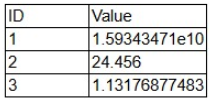
Which of the following data types should an analyst use for the numeric values in the Value column?
Key Takeaways
The core concept is data type efficiency; integers are preferred over floating-point types for whole numbers to save storage and ensure exactness.
Learn why the Integer data type is the correct choice for numeric values representing whole numbers in data analysis, avoiding unnecessary precision overhead from Float or Double.
Common mistake: Candidates often choose Float or Double, assuming all 'numeric' data requires decimal capability, ignoring that integers are more efficient and precise for whole numbers.
Expert Analysis
The question asks to identify the appropriate data type for numeric values in a 'Value' column, referencing an exhibit image that is not visible. However, we can deduce the correct answer by analyzing the options and common exam patterns for the CompTIA Data+ (DA0-002) certification.
Analysis of Options:
- A. Double: A double-precision floating-point number. It is used for numbers with decimal points, offering high precision but using more storage space.
- B. Float: A single-precision floating-point number. Also used for decimals, but with less precision than a double.
- C. Boolean: Represents binary states: True/False or 1/0. It is not a general numeric type for arbitrary values.
- D. Integer: Represents whole numbers without fractional components (e.g., 1, 10, 100).
Reasoning: In data analysis contexts, unless specific evidence of decimal/fractional data is provided, 'numeric values' in generic examples often refer to counts, IDs, or discrete quantities, which are best represented as Integers. Integers are more storage-efficient and precise for whole numbers than floating-point types (Float/Double). If the values were meant to be decimals, the question would typically specify 'decimal places' or show example data like '3.14'. Since no such specification exists, and considering the comment suggesting 'Integer' for 'whole numbers', Option D is the most standard answer for general numeric columns representing counts or discrete units.
Trap: The main trap is assuming all numbers are floats or doubles because they are 'numeric'. However, in database design and data preparation, choosing the most specific and efficient type (Integer for whole numbers) is a key principle. Without visual confirmation of decimals, Integer is the safest and most technically correct default for 'numeric values' implying discrete counts.
Therefore, the analyst should use Integer for whole-number numeric values.
Exam Strategy
When selecting data types, always prioritize the smallest and most precise type that accommodates the data. For whole numbers, choose Integer over Float or Double to optimize storage and performance. Look for clues like 'count', 'ID', or absence of decimal points to guide your selection.
Frequently Asked Questions
Why not use Float for all numbers?
When should I use Double instead of Integer?
Community Votes
50% of anonymous learners picked answer A. Votes are pick records left by other test-takers — they are not the verified answer.
Discussion 2 contributions
Compiled from public community threads and reader submissions, lightly edited for clarity. Handles and vote tallies are shown as recorded, and comments reflect the views of individual contributors.
From public community threads 2
-
Amelia233 👍 1 Answered DThe Integer data type is used for whole numbers without decimal values, such as 10, 25, 100, or 500. If the Value column contains only whole-number values, Integer is the most appropriate choice. A. Double → Used for numbers with decimal values. B. Float → Used for decimal or fractional numbers. C. Boolean → Used for True/False values. D. Integer ✅ → Used for whole numbers. Final Answer: D. Integer
-
6b7911d 👍 1 Answered AA. A double has a decimal, as these numbers do. Float is just a decimal, Boolean is true/false, integer is a whole number. God this Amelia account pisses me off.
Reader comments & corrections
No reader corrections yet — spotted an error or have a note? Share it below.
Related Analysis
Practice All DA0-002 Questions
Access 100 questions with complete answers and detailed explanations.
View Full DA0-002 Practice Test →