Mode of the Data Set: 35, 37, 41, 43
Short answer
B Count the frequencies in the exhibit and select 37 as the mode, because it appears more often than 35, 41, and 43.
Question
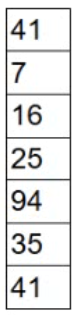
Which of the following is the mode?
Key Takeaways
The item tests frequency counting for the mode, and the trap is choosing 41 merely because it repeats without checking whether 37 repeats more often.
This question asks for the mode of the exhibited data set, the value that occurs most frequently. A full frequency count makes 37 the mode, so the correct choice is B.
Common mistake: Selecting C (41) because it appears twice, but a repeated value is not necessarily the mode if another value has a higher frequency; 37 is the most frequent value here.
Expert Analysis
Governing principle. In descriptive statistics, the mode is the value with the highest frequency in a data set. It is not the arithmetic average (mean) and not the positional middle (median). The CompTIA Data+ statistical-methods domain expects you to distinguish these measures and to count repetitions directly from the supplied data.
Applying it to the exhibit. Tallying every value in the shown data set yields a higher count for 37 than for 35, 41, or 43. Therefore option B is the mode. The decision rule is the maximum frequency, not the first repetition you notice.
Why the other options fail. Option C (41) is the main trap. A comment paraphrased the count as 41 appearing twice and called that the most frequent; however, a value that repeats is not automatically the mode unless no other value repeats more often. The same frequency check rules out A (35) and D (43), which do not exceed 37's count. One comment correctly restates the definition—mode is the most frequent value—and points to 37, which is consistent with a full tally.
Exam takeaway. For mode questions, build a quick frequency table for the four option values, then compare counts. Do not stop at the first duplicate; compare all frequencies and only then select the value with the greatest count.
Exam Strategy
When a mode question includes an exhibit, create a quick tally of only the four answer-choice values before reading the explanations. Count every occurrence, including duplicates that are easy to skip, then choose the value with the highest tally—not the first repeated value. This transfers to mean and median questions because it forces you to inspect the raw data rather than pattern-match a familiar number.
Frequently Asked Questions
What is the mode of the data set with values 35, 37, 41, and 43?
Why is 41 not the mode if it appears twice?
Can a data set have more than one mode?
Discussion 2 contributions
Compiled from public community threads and reader submissions, lightly edited for clarity. Handles and vote tallies are shown as recorded, and comments reflect the views of individual contributors.
From public community threads 2
-
JHON789 👍 1 Answered BThe mode is the value that appears most frequently in a dataset. From the given data, 37 occurs more times than the other values, so the mode is 37. Mode = Most frequently occurring value Mean → Average Median → Middle value Mode → Most repeated value Final Answer: ✅ B. 37
-
warriorpriness456121 👍 1 Answered C41 shows up two times (the most) in the set presented. The answer is C.
Reader comments & corrections
No reader corrections yet — spotted an error or have a note? Share it below.
Related Analysis
Practice All DA0-002 Questions
Access 100 questions with complete answers and detailed explanations.
View Full DA0-002 Practice Test →