Cybersecurity Code of Ethics: True/False Hotspot
HOTSPOT
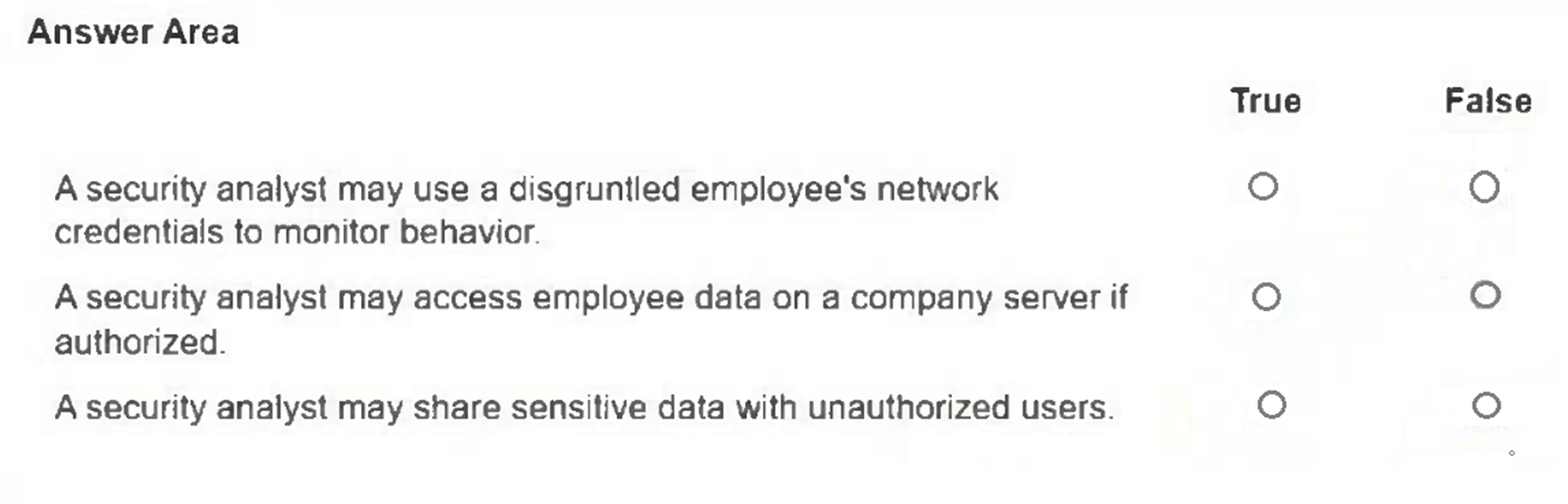
For each statement, select True if the statement adheres to the cybersecurity code of ethics or False if it does not.
Note: You will receive partial credit for each correct selection.
Community Insight
The core trap is distinguishing between 'accessing data' in general versus accessing it only when explicitly authorized; ethical behavior hinges on permission and lawfulness.
This hotspot question tests the CompTIA Security+ cybersecurity code of ethics by asking candidates to evaluate statements about credential use and data access. It establishes that unauthorized impersonation is always unethical, while authorized access aligns with professional standards.
Candidates often incorrectly mark 'using disgruntled employee credentials' as acceptable for monitoring purposes, failing to recognize that impersonation violates integrity and accountability principles regardless of intent.
Community Discussion (1 comments)
Comments & Corrections
No comments yet — spotted an error or have a note? Share it below.
Expert Analysis
Why the Answer Is Correct
The correct selections rely on the fundamental tenets of the CompTIA Code of Ethics, specifically regarding professional responsibility and integrity. Using another person's credentials without explicit authorization constitutes impersonation and a breach of trust, making that statement False. Conversely, accessing employee data is permissible only when there is explicit authorization, making that statement True.Why Other Candidate Answers Are Wrong
Incorrectly marking the first statement as True ignores the strict prohibition against unauthorized access and identity theft. Misinterpreting the second statement as False might stem from a misunderstanding of privacy laws, but the key qualifier is 'if authorized,' which makes the action ethically compliant under professional guidelines.Community Comment Notes
Community feedback confirms that using credentials without permission is a clear violation. As Roattana noted, 'Impersonating an employee... violates ethical standards.' The consensus is that authorization is the deciding factor for data access scenarios.Exam Strategy
Always look for qualifiers like 'authorized' or 'unlawful' in ethics questions. If an action involves bypassing normal controls (like sharing credentials), it is almost certainly unethical unless stated as part of a formal, documented exception process.
Frequently Asked Questions
Is it ever okay to use a coworker's login to monitor their activity?
No. Using another person's credentials without their knowledge or explicit written authorization is considered impersonation and is a direct violation of the CompTIA Code of Ethics.
What does 'authorized' mean in the context of data access?
It means having explicit permission from management or policy to view specific data for legitimate business purposes, ensuring compliance with privacy regulations and internal security policies.